Home

ORGANIZE YOUR FINANCES.
BUILD THE LIFE YOU DREAM OF.

Take control of your money, plan for your goals, and turn your vision into reality.

Your goals come first.
Your financial plan follows.

Organizing your finances becomes more meaningful when the numbers connect to something you want: a home, a new career, a trip or more freedom with your time.

Tracking shows where you stand today. Cash flow projections show where you could be heading—and when your goals could come within reach. Each update becomes a chance to see your progress and explore what would help you get there.

That is what can make tracking exciting. You can see what an extra contribution changes, whether a goal fits your plans and how much further you have to go.

Here is how to organize your finances around that idea: choose a goal, track the numbers that matter and build a projection you can keep updating. Use a spreadsheet or a dedicated finance app to keep your accounts, income, expenses, and goals together.

5 Steps to Organize Your Finances

Connect everyday money tracking to the future you want to build.

01

Start with a goal you care about

What would you like your money to make possible? Start with something that matters to you, then give it an estimated cost. A target date gives your projection something to test; you can adjust it as you learn.

Put it into practice

  1. Choose a goal: a course, a move, time away or something else you want to work toward.
  2. Write down its estimated cost, the amount already saved for it and when you would like to reach it.
  3. Subtract what you have saved from the cost. Divide the gap by the months remaining to see the monthly amount needed.
Example: A course costs $1,800 and you have $600 set aside. You are already one-third of the way there. To close the remaining $1,200 gap in six months, you would need $200 a month.

What you’ll have: A goal, a starting point and a monthly amount to test against your budget.
02

Build a tracking system that fits your life

Choose a way to track income and expenses that you will actually use. A useful system gives you enough detail to understand your money and update your projection without making every review feel like a chore.

Put it into practice

  1. List your accounts, current balances and outstanding debts to establish your starting point.
  2. Collect a month of income and spending. Use categories that help you make decisions; add detail only where it is useful.
  3. Keep transfers between your own accounts separate from spending. Avoid counting a credit-card purchase and its later repayment as two expenses.
  4. Check your records against your statements. Choose a routine that suits you: a short weekly update, a payday check-in or a monthly review.
Make it yours: If food spending is something you want to understand, separate groceries from eating out. If that distinction does not help you make a decision, keep the category simple.

What you’ll have: Records you can trust and a tracking routine you can keep using.

03

See where you stand today

Your records give your projection a starting point. Look at what comes in, what goes out and how much is already set aside for your goal.

Three views help you connect the numbers: an income and expense report shows what you earn and spend; a balance sheet shows what you own and owe, with the difference being your net worth; and a cash flow projection shows how expected money coming in and going out could affect your future balances.

Put it into practice

  1. Compare take-home income with your usual expenses and required debt payments. Account for costs that arrive less often, such as annual bills.
  2. Keep money needed for bills and other commitments separate from the amount available for your goal.
  3. Record your goal progress: amount saved, amount still needed and the contribution your current budget can support. If you track several goals, avoid assigning the same savings to more than one.
Your starting picture: With $600 saved toward a $1,800 course, your progress is about 33%. If your budget supports $200 a month, you now have the inputs for a first projection.

What you’ll have: A clear view of what you have and what you can put toward your goal.

04

Project when you could reach your goal

A cash flow projection uses your current balances, expected income and planned outflows to estimate what happens next. Connecting it to a goal lets you ask the exciting question: “When could I make this happen?”

Put it into practice

  1. Map expected income, bills and other commitments into the coming months. Include irregular costs and check pay dates and bill dates so you can see any shortfalls within a month.
  2. Use that cash-flow view to estimate what you can add to your goal each month. Carry the goal balance forward: opening goal savings + contribution − any withdrawals.
  3. Extend the projection to the month your goal balance could reach its target. Show both the amount still needed and the estimated time remaining.
  4. Try a change that could work in your life: a different contribution, a lower goal cost or more time. Check how it affects both the goal and the money available for everyday needs.
See your goal getting closer · illustrative example

You have $600 toward a $1,800 course. Assume your budget supports a $200 monthly contribution, with no withdrawals, interest or change in the course price.

Projected course savings at $200 a month
WhenGoal savingsStill neededProgress
Today$600$1,20033%
After 2 months$1,000$80056%
After 4 months$1,400$40078%
After 6 months$1,800$0100%

What could change? At $300 a month, the same goal would take four months. At $150, it would take eight. Use your cash-flow projection to see which contribution fits your life. These are possible paths based on the assumptions, and you can update them as things change.

What you’ll have: A projected path to your goal and a contribution that fits your cash flow.

05

Update your plan and see your progress

Each time you update your records, you can see how reality compares with your plan. That connection gives tracking a purpose: you learn how close you are to something you care about.

Put it into practice

  1. Replace projected amounts with actual income, expenses and goal contributions as they happen.
  2. Refresh upcoming costs and contributions, then check your goal balance and projected completion date.
  3. Ask what has changed and what you want to do next. Keep the plan, adjust the contribution or reconsider the date or goal.
  4. Make the system easier to use as you go. Keep the reports and categories that help you, and choose a review rhythm that fits your life.
Make progress visible: After two $200 contributions, the course fund reaches $1,000—about 56% of the target. You can see both what you have achieved and the $800 still to go. If a contribution changes, update the remaining path.

What you’ll have: An updated projection that shows your progress and helps you choose your next step.

Build on What You've Started

Two books to help you understand your finances, define your goals, and take control of your future.

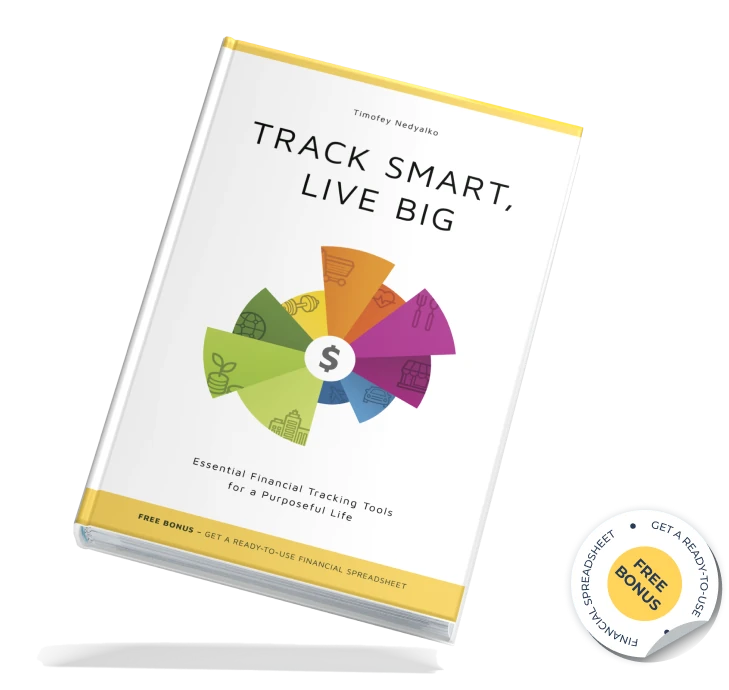
Track Smart, Live Big book cover

Track Smart, Live Big

“I want to understand and take control of my finances.”

Learn why organizing your finances matters and discover the essential tools to do it effectively.

Understand how financial reports work, how they connect, and how they come together to give you a complete picture of your financial health—so you can make informed decisions and plan your future with confidence.

LEARN MORE
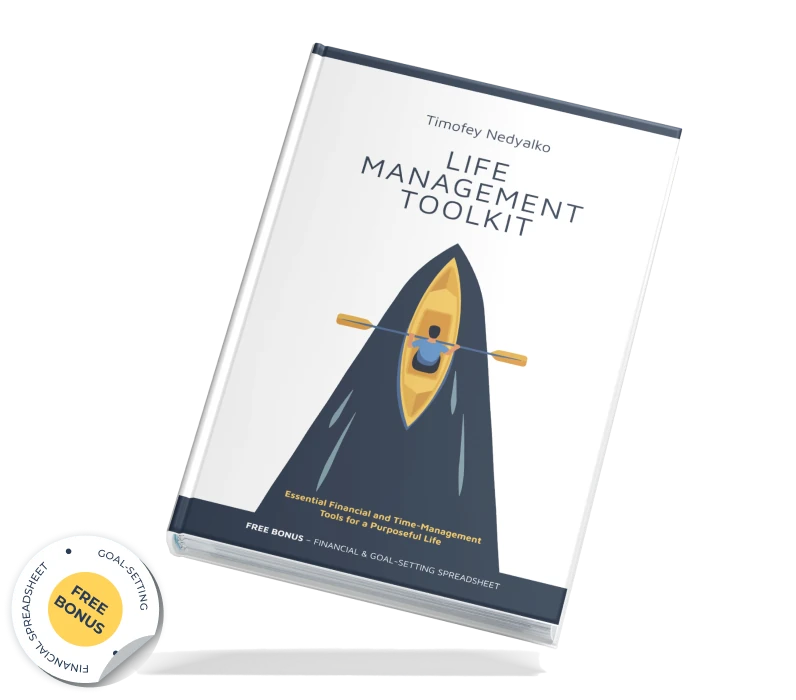
Life Management Toolkit book cover

Life Management Toolkit

“I want to turn my dreams into achievable goals.”

Discover a practical system to define your mission and vision, set meaningful goals, and organize your priorities.

Learn how to connect your goals with your finances and daily actions, creating a clear roadmap toward the life you want.

LEARN MORE

Frequently Asked Questions

What is the first step to organizing your finances?

Start by defining a goal that matters to you. Estimate how much it will cost, review your current financial situation, and create a realistic plan to achieve it. Your financial decisions should support your goals, not determine them.

What is a cash flow projection?

A cash flow projection shows how your finances could look in the future based on your expected income, expenses, and savings. It helps you anticipate challenges, make better decisions, and understand when you might achieve your financial goals.

How can tracking my finances help me reach my goals?

Tracking your finances helps you understand where your money goes, identify opportunities to save, and measure your progress. Instead of guessing, you can make informed decisions and adjust your financial plan to reach your goals faster.

What's the best way to organize and track my finances?

Use a financial management system that brings your accounts, income, expenses, and goals together. Whether you prefer a spreadsheet or a dedicated app, the key is having a system that helps you stay organized, monitor your progress, and plan for the future.

Timofey Nedyalko, author

About the Author

Timofey Nedyalko is an entrepreneur and the author of Track Smart, Live Big and Life Management Toolkit.

I believe organizing your finances becomes exciting when you can see how it connects to the life you want. Tracking gives you a starting point; projections help you see how close you are to your goals and explore what could get you there. In my books, I explain how financial tracking, reports, and goal setting work together. My approach is to make that process practical, with a system that works for you.

Follow Me On Social Media

timofey.nedyalko@gmail.com
Privacy Policy|Terms of Service